Recently, the State Council issued the first 10-year action plan for China to implement the strategy of becoming a manufacturing power - Made in China 2025, which describes the strategic goal of entering the forefront of the world's manufacturing power in three 10 years, and proposes specific strategic policies, tasks, key projects and fields.
At present, China's textile industry is in a critical period of accelerating transformation and upgrading, and it is an important strategic goal to become one of the world's textile powers. In 2012, the industry released the Outline for Building a Textile Power (2011-2020), proposing to vigorously implement four strategies of science and technology, brand, sustainable development and talent. Among them, key tasks such as improving the original ability of core technology, improving quality support brand, and low-carbon green cycle development are highly consistent with Made in China 2025, and the vision and goal of a textile power are consistent with the direction of Made in China 2025. The tasks and requirements of Made in China 2025 on deepening structural adjustment, developing productive services, and improving the level of internationalization are detailed in the Twelfth Five Year Plan for the Development of Textile Industry and the ongoing preliminary study of the 13th Five Year
Plan. The introduction of Made in China 2025 has strengthened the courage and confidence of the textile industry in sticking to the path of becoming a powerful country, and also more clearly pointed out the goal and direction of moving towards the dream of becoming a powerful country.
There are some new highlights in the path planning and task measures of "Made in China 2025" to achieve a manufacturing power, which is worth strengthening attention and learning from the textile industry.
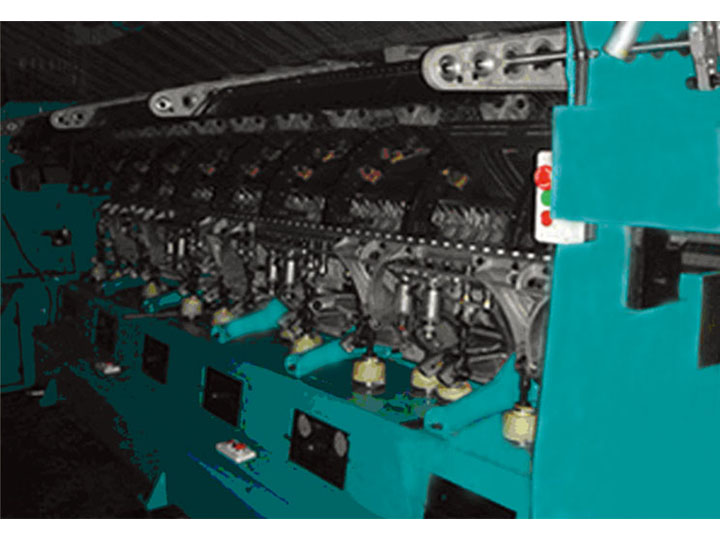
First, promote the process of textile intelligent manufacturing. Taking intelligent manufacturing as the main direction of in-depth integration of industrialization and industrialization is a prominent feature of the strategic task of Made in China 2025. Whether from the perspective of participating in international industrial competition, resolving resource bottlenecks, or meeting new market demands, the application of new generation information technology to achieve intelligent changes in manufacturing mode is the only way for China's textile industry to become a world power. In recent years, the application of continuous and automatic equipment has become increasingly widespread, and the online monitoring technology of production process has made a breakthrough, which indicates that the textile industry has made progress in intelligent upgrading. However, to achieve the continuous operation of the whole process, digital control, real-time monitoring and adaptive control, and complete manual replacement, it is still necessary to vigorously strengthen the research and development of key equipment and management systems, and still need to steadily work from intelligent production lines to digital chemical plants Step by step.
Second, accelerate the research and application of new textile materials. New materials are one of the ten key areas identified in Made in China 2025. High performance materials, composites, bio based materials, etc. are all important contents of material innovation. On the basis of fully recognizing the decisive influence of fiber material technology on the position of international division of labor, the textile industry gradually broke through the key technologies of industrialization of high-performance fibers such as carbon fiber T300, aramid 1313, and bio based fibers such as polylactic acid and chitosan by using the "11th Five Year Plan" and "12th Five Year Plan", and the product application has expanded. However, compared with national major strategic needs such as national defense, aerospace, environmental protection, protection and oil security, China's independent innovation capability of high performance fibers such as carbon fibers above T700 and para aramid fibers is still insufficient, and it is urgent to break through the international technology monopoly. Biobased fibers are still in the tracking stage, and cannot effectively replace oil resources. The industry's R&D and innovation in related fields can never stop.
Third, strengthen the basic capabilities of the textile industry. Strengthening the core basic parts, advanced basic processes, key basic materials and industrial technology base is the solution path pointed out by Made in China 2025 to break the bottleneck of innovation and development; It is also an inevitable task for the textile industry to transform from large to strong to strengthen the "four bases" and constantly improve its comprehensive competitive strength. At present, the self-sufficiency rate of chemical fiber and fabric in China exceeds 95%, and the self-sufficiency rate of equipment exceeds 80%. The textile industry has a good industrial foundation. In the future, in order to continuously improve the manufacturing level and strengthen innovation advantages, the industry needs to cooperate with upstream and downstream resources of the industrial chain to strengthen application and innovation in the development of functional and differential fiber materials. The basic textile process still needs to be continuously upgraded with the goal of improving efficiency and reducing consumption and emission. Specialized basic spare parts still need to improve their self-sufficiency guarantee ability. At the same time, it is also important to strengthen the basic support of the innovation platform.
Fourth, develop service-oriented textile manufacturing. Made in China 2025 proposes to promote the transformation of manufacturing enterprises from providing product manufacturing to providing products and services, apply a new generation of information technology, and form new industrial forms, business models and economic growth points. As an end consumer goods manufacturing industry, supported by information technology, it is an important way for the textile industry to extend to the high-end of the value chain by providing personalized product design and overall solutions to achieve online precision marketing and online services and effectively meet diversified and multi-level market needs. In recent years, clothing mass customization technology and e-commerce platform have been integrated and applied, enriching the textile business model and format. In the future, while further integrating the application of information network technology, we will continue to deepen the interaction and matching between textile manufacturing and market services, improve the level of service specialization, and service-oriented manufacturing will become a new driving force for market development.