Textile industry: benefit the international competitiveness of textile and garment industry
Source: | Date of issue:
2022-09-22
| Views:
key word: Textile industry: benefit the international competitiveness of textile and garment industry
Event: The Ministry of Finance and the State Administration of Taxation issued a notice on December 31, 2014 to adjust the export tax rebate rate of some products, including some textiles and clothing (Chapter 50-63, mainly yarn categories, including some high-end yarn, wool yarn, etc.). The export tax rebate rate has been increased to 17% since January 1, 2015.
Comments: The export tax rebate policy has been adjusted frequently since it was implemented in 1985. This time, the export tax rebate rate of some textiles and clothing increased to 17%, which is good for the international competitiveness of the whole textile and clothing industry.
In March 1985, the State Council formally promulgated the export tax rebate policy, which was implemented on April 1, 1985; After frequent adjustments, the export tax rebate rate of textiles and clothing roughly remained within the range of 5% - 17%.
The adjustment of export tax rebate rate serves the needs of the country for the adjustment of foreign trade export structure. Taking textiles and clothing as an example, in order to get rid of the drag of the Asian financial crisis in 1998, the country raised the export tax rebate rate of textiles and clothing from 6% to 11% in January 1998; The year 2005 was the golden peak of China's textile and clothing exports. In order to reduce the trade surplus, the country reduced the export tax rebate rate of textiles from 13% to 11% in 2006, and then to 5% in 2007 (viscose fiber); After the financial crisis broke out in 2008, the export tax rebate rate of viscose fiber was raised from 5% to 14%. The export tax rebate rate has increased from 16% in 2009 to 17%, mainly due to the adverse environment of the continuous downturn in the export of textiles and clothing in the past three years, and the accelerated flow of low-end orders to Southeast Asian countries.
From 2008 to the first 11 months of 2014, the year-on-year growth rate of China's textile and clothing exports was 8%, - 10%, 24%, 21%, 2%, 11% and 5.6% respectively, while the year-on-year growth rate of Vietnam's textile and clothing exports in the same period has averaged more than 40% since 2009. The continuous rise of domestic costs (labor, environmental protection, raw materials, etc.) has weakened the international competitiveness of China's textile industry.
The export tax rebate rate increased from 16% to 17% (some textiles and clothing), which is good for the improvement of international competitiveness from the perspective of the whole industry.
Enterprises in the industry benefit from different product structures and business structures. Enterprises whose products are mainly yarn and mainly export, and whose bargaining power is relatively strong, will benefit significantly.
The increase of export tax rebate rate is beneficial to the competitiveness of China's textile industry in the world. However, due to the different product structure (the increase of export tax rebate rate is mainly aimed at yarn) and business structure (the export proportion of products of different enterprises is different), enterprises in the industry have different benefits.
The export-oriented enterprises focusing on yarn will benefit fully logically, but from the historical experience of the business level, the bargaining power of textile enterprises as raw material suppliers is extremely limited. Under the condition that downstream customers fully understand the supplier's cost structure and policy changes, downstream tourists will strive for more proportion of policy dividends, Considering the overall environment where downstream customers place orders cautiously (cotton prices are still declining and have not yet stabilized), leading enterprises with relatively strong bargaining power are expected to benefit partly from the policy dividend of increasing export tax rebate rate.
According to the above logic, it is expected that Wafer colored yarn (mainly high-end colored yarn, with a direct export proportion of about 30%) and Blum Oriental (mainly high-end colored yarn, with a direct export proportion of about 30%) will benefit directly.
We tend to interpret the increase of export tax rebate rate as a tool for the country to adjust the macroeconomic structure and export product structure. The core appeal is still to stabilize foreign trade and ease the downward pressure on the economy. Among the troika of investment, foreign trade and consumption, the current investment lacks the conditions for large-scale stimulus (the finance is relatively tight, and the enthusiasm of private investment is not high), and the bulk consumption continues to be depressed (the real estate market is sluggish, and emerging consumption cannot play a significant role in the short term). Boosting foreign trade is also conducive to boosting the domestic economy. From this perspective, the improvement of export tax rebate rate is expected to be only a part of boosting foreign trade, As a major category of exports, textiles and clothing are bound to benefit.
Specific to the investment logic of the industry, we maintain the "overweight rating" of the textile industry. From the medium-term trend, the high cost dilemma of cotton textile enterprises since 2010 is expected to start to reverse in 2015. Since 2010, cotton textile enterprises are facing the rising high cost dilemma. With the natural growth of human costs, the peak of environmental protection costs, and the decline in the price of cotton, the cotton textile enterprises are expected to face the dilemma reversal in 2015, Improve international competitiveness. In addition, after the early industry integration, the enterprises with small scale and relatively weak operation strength will exit the market competition, and the industry concentration is expected to increase as a whole. After the order and other resources are gathered to the leading enterprises, it is expected that the market share of the leading textile enterprises will be significantly increased. Although the increase of export tax rebate rate has little specific impact on enterprises in the industry (the net interest rate of all export yarn enterprises with bargaining power will be increased by 1% due to this impact), it will strengthen our logic from the perspective of the industry.
Please indicate the source of the reprint(Textile industry: benefit the international competitiveness of textile and garment industry:/companynews/422)
Related Articles
Related Products
-

Carding machine
-

High speed needle punching machine
-
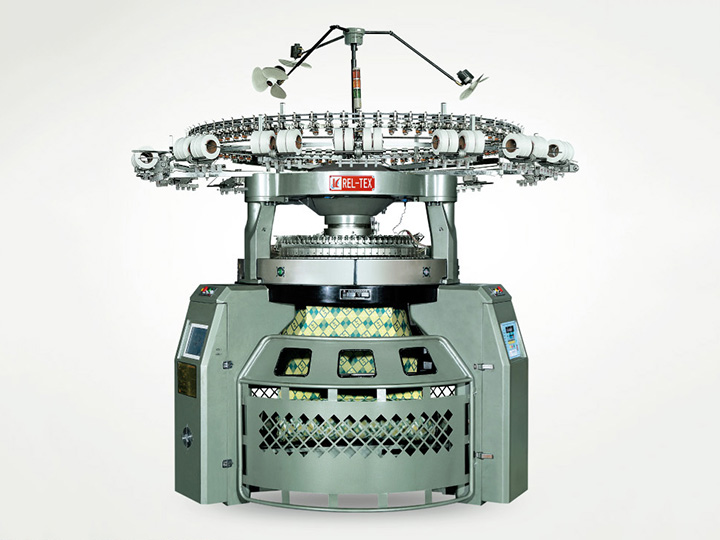
Jacquard machine
-
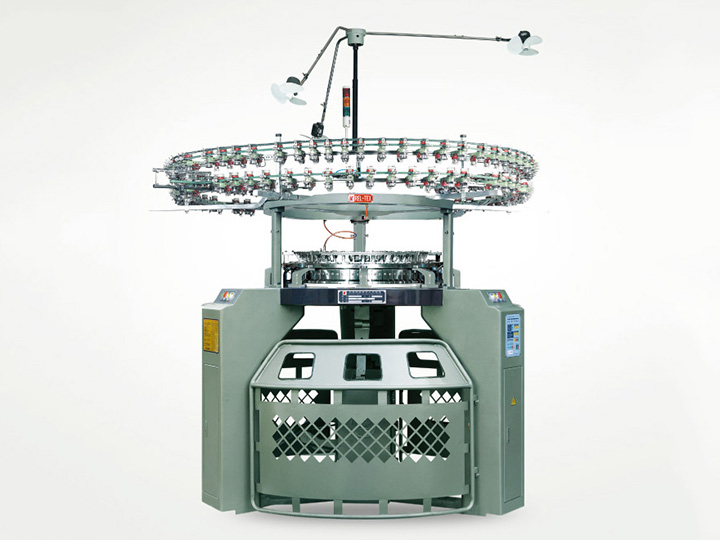
Towel knitting machine
-
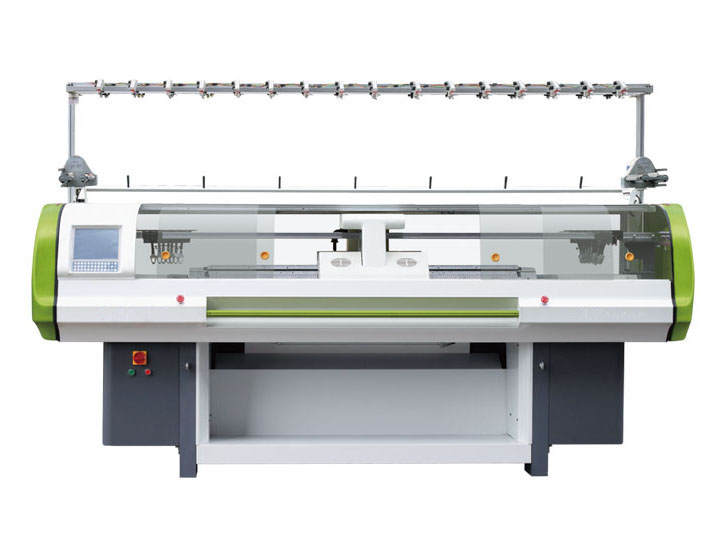
Computerized flat knitting machine
-
Jacquard warp knitting machine
-

Lola
-
Leather roller bearing